Birds Care Sheet
Not all birds require the same care and can live together. These are some of the common birds we have in store and how to care for them. A lot of information is the same however some is slightly different.
Budgies:
Budgies are very social birds and do benefit from having a friend. Budgies have a very playful character. They make beautiful sounds and can be taught to talk. Budgies are the world's smallest true parrot. Despite being tiny, they have the intelligence and personality you associate with much bigger parrots. Their colours are vibrant and bright.
Life Span:
Budgies live between 7-15 years in captivity and get around 18cm to 20cm in size.
Enclosure:
Budgies can live in an aviary but can be kept in an indoor cage as long as it is a good size (height and length) They need to have enough space to be able to fly at least 2 wing beats and be able to stretch out their wings without hitting any items in their enclosure. We recommend the Avi One Large Flight Cage however bigger is always better. They also require several perches with a range of lengths and swings. Perches should never be positioned above water or food to prevent contamination, and they should be spaced apart to promote flying and their natural behaviour. Other toys can be added such as bells, ladders, shedding toys, balls and foraging toys however do not over crowd the cage.
Having either newspaper or a seed cage liner of the bottom on the cage will save their little feet from damage and help with clean up which needs to be every few days.
Budgies are friendly to other budgies but can be mean to other birds, so they need to be housed with other budgies only. Budgies are very social birds so if you are planning on just keeping one, you will need to spend time with them and also provide lots of toys to keep them entertained. We recommend you keep budgies together as they benefit from the company of another budgie.
Diet:
Budgies should always have fresh water and Budgie seed available. We feed and recommend Topflite Budgie mix. Cuttlefish bone is also a necessity as they use this to absorb calcium and to also wear down their beaks as a Budgies beak never stop growing.
Fresh vegetables are essential for budgies as this promotes their health. In store we feed apples, broccoli heads, cucumber, millets,
Other foods they can eat are: rocket, spinach, kale, cabbage, parsley, cilantro, mint, and dill, dandelion greens, carrots, cauliflower and broccoli florets, bell peppers, green beans and peas.
Avoid: Avocado, anything from the Onion family, apple seeds.
Canary:
Canaries are well known for their gorgeous songs with males being the best performer. They are a calm bird and are happy to live by themselves, within a male/female pair or 2 females as the males may become aggressive looking for a mate. In large aviaries you can have multiple living together with enough space.
Life Span:
Canaries can live for around 10 - 15 years and get around 7.5cm to 10cm in size
Enclosure:
Canaries can live in an aviary with other community birds such as finches and quails, but can be kept in an indoor cage as long as it is a good size. For inside birds, we recommend an Avi One Large Flight Cage however bigger is always better. They also require several perches with a range of lengths. Perches should never be positioned above their water or food bowls to prevent contamination. They should be spaced apart to promote flying and their natural behaviour. Lots of suitable toys to stop any boredom and entertain them.
Having either newspaper or a seed cage liner of the bottom on the cage will save their little feet from damage and help with clean up which needs to be every few days. Other toys can be added such as bells, ladders, shedding toys, balls and foraging toys however do not over crowd the cage.
Diet:
Canaries should always have fresh water and Canary seed available. We feed and recommend Topflite Canary mix. Cuttlefish bone is also a necessity as they use this to absorb calcium and to also wear down their beaks.
Fresh vegetables are a essential for Canaries as this promotes their health. In store we feed apples, broccoli heads, cucumber, millets,
Other foods they can eat are: rocket, spinach, kale, cabbage, parsley, cilantro, mint, and dill, dandelion greens, carrots, cauliflower and broccoli florets, bell peppers, green beans and peas.
Avoid: Avocado, Anything from the Onion family, apple seeds.
Cockatiels:
Cockatiels have way more personality and intelligence than people sometimes realise. They have a distinctive crest at the top of their heads which is an emotional indicator. They can recognise their people and can form very strong bonds with humans and may greet their favourite person, follow them around or call when they leave the room. Males are generally more likely to whistle and mimic sounds although individual females can be very vocal too.
Life Span:
Cockatiels can live between 12 - 15 years and get as big as 25-30cm including their tails.
Enclosure:
Cockatiels can live in an aviary but can be kept in an indoor cage as long as it is a good size (height and length) They need to have enough space to be able to fly at least 2 wing beats and be able to stretch out their wings without hitting any items in their enclosure. They also require several perches with a range of lengths and swings. Perches should never be positioned above water or food to prevent contamination, and they should be spaced apart to promote flying and their natural behaviour.
Having either newspaper or a seed cage liner on the bottom of the cage will save their little feet from damage and help with clean up which needs to be every few days. Other toys can be added such as bells, ladders, shedding toys, balls and foraging toys however do not over crowd the cage.
Cockatiels are friendly to other Cockatiels but can be mean to other birds, so they need to be housed with other Cockatiels only. Cockatiels are very social birds so if you are planning on just keeping one, you will need to spend time with them and also provide lots of toys to keep them entertained. We recommend you keep Cockatiels together as they benefit from the company of other Cockatiels. With lots of patience you can train your Cockatiel to talk, sit on your hand and be out of the cage however this is best to do when they are very young. We do not often get hand-raised birds in store.
Diet:
Cockatiels should always have fresh water and Cockatiel seed available, We feed and recommend Topflite Cockatiel mix. Cuttlefish bone is also a necessity as they use this to absorb calcium and to also wear down their beak, as cockatiel's beaks never stop growing.
Fresh vegetables are a necessity for Cockatiels as this promotes their health. In store we feed apples, broccoli heads, cucumber, millets,
Other foods they can eat are: rocket, spinach, kale, cabbage, parsley, cilantro, mint, and dill, dandelion greens, carrots, cauliflower and broccoli florets, bell peppers, green beans and peas.
Avoid: Avocado, Anything from the Onion family, apple seeds.
Love Birds
Just like their name suggests, Lovebirds do in fact fall in love. They are one of a few bird species that mate for life with a birdy BFF. When separated from their loves, they can experience great depression. They can also bond closely with humans forming a loving connection when the time is put in. They can be very vocal with a lovely high pitched squeel.
Life Span:
Love birds can live between 10 to 15 years and get as big as 13 - 17cm head to tail.
Enclosure:
Love Birds can live in an aviary but can be kept in an indoor cage as long as it is a good size (height and length) They need to have enough space to be able to fly at least 2 wing beats and be able to stretch out their wings without hitting any items in their enclosure. They also require several perches with a range of lengths. Perches should never be positioned above water or food to prevent contamination, and they should be spaced apart to promote flying and their natural behaviour.
Having either newspaper or a seed cage liner on the bottom of the cage will save their little feet from damage and help with clean up which needs to be every few days. Other toys can be added such as bells, ladders, shedding toys, balls and foraging toys however do not over crowd the cage.
Love Birds are friendly to other Love Birds but can be mean to other birds, so they need to be housed with other Love Birds only. Love Birds are very social birds so if you are planning on just keeping one, you will need to spend time with them and also provide lots of toys to keep them entertained. We recommend you keep Love Birds together as they benefit from the company of another Love Bird. With lots of patience you can train your Love Bird to talk, sit on your hand and be out of the cage however this is best to do when they are very young. We do not often get hand-raised birds in store.
Diet:
Love Birds should always have fresh water and Cockatiel seed available, We feed and recommend Topflite Cockatiel mix. Cuttlefish bone is also a necessity as they use this to absorb calcium and to also wear down their beak, as Love Birds beaks never stop growing.
Fresh vegetables are a necessity for Love Birds as this promotes their health. In store we feed apples, broccoli heads, cucumber, millets,
Other foods they can eat are: rocket, spinach, kale, cabbage, parsley, cilantro, mint, and dill, dandelion greens, carrots, cauliflower and broccoli florets, bell peppers, green beans and peas.
Avoid: Avocado, Anything from the Onion family, apple seeds.
Finches
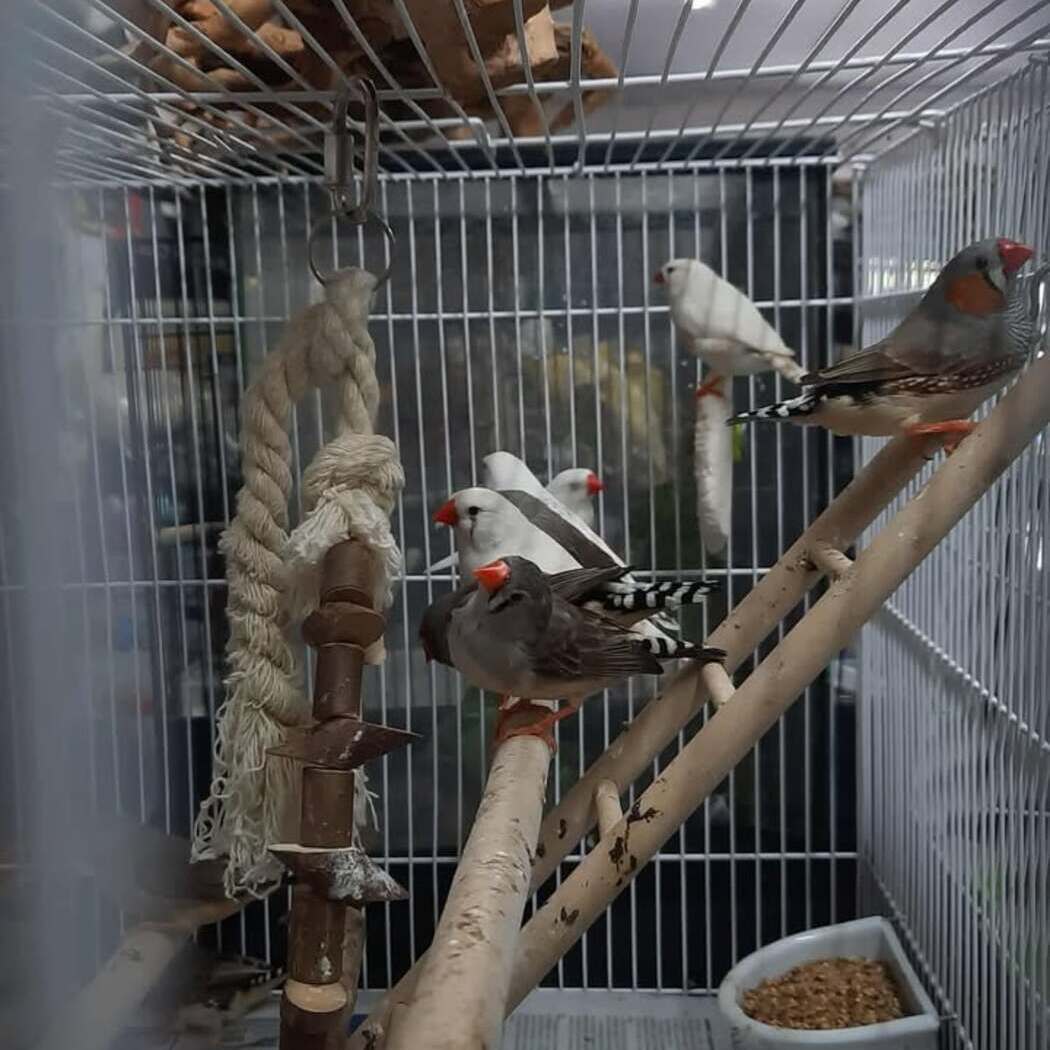
Finches are low-maintenance and very social birds. They are very easy to care for and make lovely pepping sounds to each other. They thrive in pairs or small groups and do not like being handled. They are incredibly active and surprisingly clever. Zebra finches are particularly musical with males learning their songs when young and develop an individual song. They can even modify their songs over time. Finches may be tiny but have BIG personalities.
Life Span:
Finches can live between 4 to 7 years and can get 10 - 15cm
Enclosure:
Finches can live in an aviary with other community birds such as Canaries and Quails, but can be kept in an indoor cage as long as it is a good size. For inside birds, we recommend a Avi One Medium Flight Cage however bigger is always better. They also require several perches with a range of lengths. Perches should never be positioned above their water or food bowls to prevent contamination. They should be spaced apart to promote flying and their natural behaviour. Lots of suitable toys to stop any bordom and entertain them.
Having either newspaper or a seed cage liner on the bottom on the cage will save their little feet from damage and help with clean up which needs to be every few days. Other toys can be added such as bells, ladders, shedding toys, balls and foraging toys however do not over crowd the cage.
Diet:
Finches should always have fresh water and Finch seed available. We feed and recommend Topflite Finch seed. Cuttlefish bone is also a necessity as they use this to absorb calcium and to also wear down their beaks.
Fresh vegetables are essential for Finches as this promotes their health. In store we feed apples, broccoli heads, cucumber, millets,
Other foods they can eat are: rocket, spinach, kale, cabbage, parsley, cilantro, mint, and dill, dandelion greens, carrots, cauliflower and broccoli florets, bell peppers, green beans and peas.
Avoid: Avocado, Anything from the Onion family, apple seeds.
Recommended Products:
To see all products needed for your Birds click here Birds
Posted: Tuesday 12 March 2024