Chinchilla Care Sheet
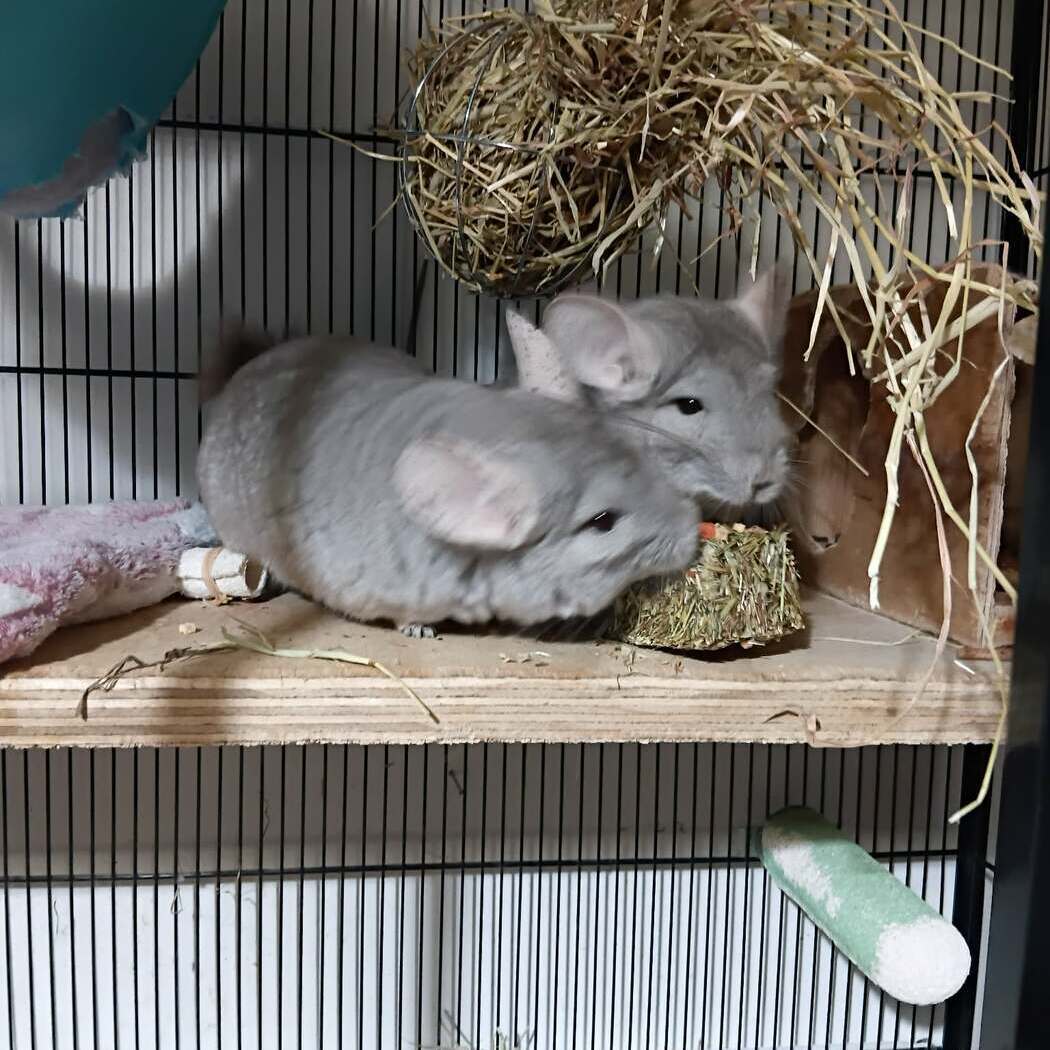
Chinchillas are a unique and gorgeous pet to have however they do require a lot of attention and care. They are intelligent, active and long living pets. With the right diet, a cool environment, a roomy enclosure, daily enrichment and regular dust baths, they can thrive for many years. They originated in South America where they live in the Andes Mountains and Chinchillas have some of the softest fur in the world. Chinchillas make great pets because as they are typically quite docile and once they’re comfortable with you, they can be pretty easy to handle although this does depend on each chinchilla. Chinchillas are social animals and do best when living together in same-sexed pairs. Males and females can live together but to avoid accidental breeding they should be neutered.
Chinchillas are classed as a rodent and they are a relative of the Guinea pig family. They are nocturnal, meaning they prefer to sleep during the day and are often more active at night. They can NEVER get wet and require a dust bath weekly to give their coat and prevent getting too oily. Getting them wet can cause the skin can become inflamed and traps moisture which can cause multiple skin infections.
Life Span:
Chinchillas can live between 10-15 years.
Enclosure:
Chinchillas need lots of space to run, climb and jump. The enclosure needs to have a flat bottom such as a plastic tray to prevent sores on their feet. The enclosure should have multiple tiers, platforms, ramps, and shelves for climbing, resting and playing as well as a house for sleeping. Make sure every level is secure and there are no dangerous gaps. You can include hammocks however these cannot be made out of plastic as chinchillas will eat anything with their sharp little teeth so natural wood is best. Placement of the enclosure is very important and needs to be out of direct sunlight and in a cool area. Temperature is critical as chinchillas are very heat-sensitive. Aim for a cool, stable environment and take extra care during warm weather. Never leave a chinchilla in a hot room, conservatory or vehicle.
We recommend the Avi One 604T which makes a great enclosure however this will need to be adapted with levels for the Chinchillas to jump and climb.
Chinchillas enjoy time out of their encloures to have some exercise. This needs to be a secure place ideally kept away from any household items that may cause damage, any chewing hazards such as cords and wires and house plants. We use a Puppy Pen.
Bedding:
It is important to avoid wood shavings or sawdust as this can cause respiratory problems. Pine bedding are best. We recommend Timi Pine Bedding.
Cleaning out their enclosure when needed is crucial and a good deep clean at least once a week is recommended as they create a lot of waste. We find sweeping the platforms each day helps to maintain a clean looking cage.
You can train a Chinchilla to do wees in a litter tray providing the litter is a paper based litter. This will take time and observation as to where to place this that works best for them.
Food:
Chinchillas have a very Strick diet and cannot eat ‘human’ foods. We feed our Chinchillas a mix of Burgess Excel Chinchilla Nuggets and Science Selective Chinchilla Food. Some treats are suitable such as dried herbs, apple sticks, banana chips, Topflite Timothy Cakes, Topflite The Pick Meadow Medley 60g they love dandelions as a treat, the flowers as well as the plant.
Fresh Meadow or Timothy Hay should make up around 80% of your Chinchillas daily diet and should always be available.
Fresh water should always be available, pet drink bottles work perfectly for this and this needs to be changed daily.
Other foods to feed:
Good options in small amounts: dried rose petals, rose hips, plantain, dandelion leaves/flowers and other chinchilla-safe herbs, provided they are pesticide-free and introduced gradually.
Small pieces of suitable untreated branches/wood can provide chewing enrichment. Use only wood known to be safe for chinchillas and free from pesticides, paint and chemicals.
Fruit, fresh vegetables, seeds, nuts and sugary treats are best avoided or kept extremely limited. Chinchillas are adapted to a high-fibre, low-fat, low-sugar diet.
FOODS TO AVOID
Chocolate, caffeine, alcohol, onion, garlic and foods containing artificial sweeteners.
Sugary cereals, biscuits, sweets, processed human foods and high-fat treats.
Nuts and seeds as routine treats — they are too rich for regular feeding.
Sudden large quantities of fresh foods or treats.
Anything mouldy, damp, spoiled, chemically treated or of unknown plant identity.
Dust baths:
Chinchillas are unique and require regular dust baths using fine volcanic ash or specialized dusting powder to keep their dense fur clean and absorb excess oils. This needs to be done weekly for 10-20 minutes to keep their coats smart and non-greasy. Dusting is also a natural stress release. We recommend the Kaytee Chinchilla Bath which is sustainable thanks to recycled materials and Kaytee Chinchilla Bath Sand. Chinchillas unique and unusual sand bathing behaviour is entertaining, educational and exciting to watch. Remove the bath afterwards so it does not become a toilet or get contaminated. It is important to replace dust when it becomes dirty or damp. A clean bath helps maintain the dense coat and healthy skin. Do not bathe your chinchilla in water or get them wet because their fur takes a while to dry, and the skin can become inflamed.
Handling:
It is important to let a new chinchilla settle in before expecting lots of handling. Always approach calmly and allow them to come to you. Never chase them around the enclosure. You must support the body securely and never pick a chinchilla up by the tail. Being gentle and consistent handling builds trust. Every chinchilla has its own personality and tolerance and don't forget to be patient. Children should always be supervised by an adult while they enjoy spending time with chinchillas as they are very fragile.
Added Information:
Healthy chinchillas should be alert, active, eating hay, producing normal firm droppings and maintaining a clean, healthy coat.
Contact a vet promptly if your chinchilla stops eating, has markedly fewer/no droppings, develops diarrhoea, persistent drooling/wetness around the mouth, breathing problems, eye problems, severe lethargy, bloating, injury or sudden behaviour changes.
Because dental disease is common in chinchillas, regular observation of eating and chewing habits is important. Veterinary dental checks may be recommended.
For all products needed for a Chinchilla click here
Posted: Wednesday 16 September 2026